
How to Write a Book Description That Makes Readers Want to Know More
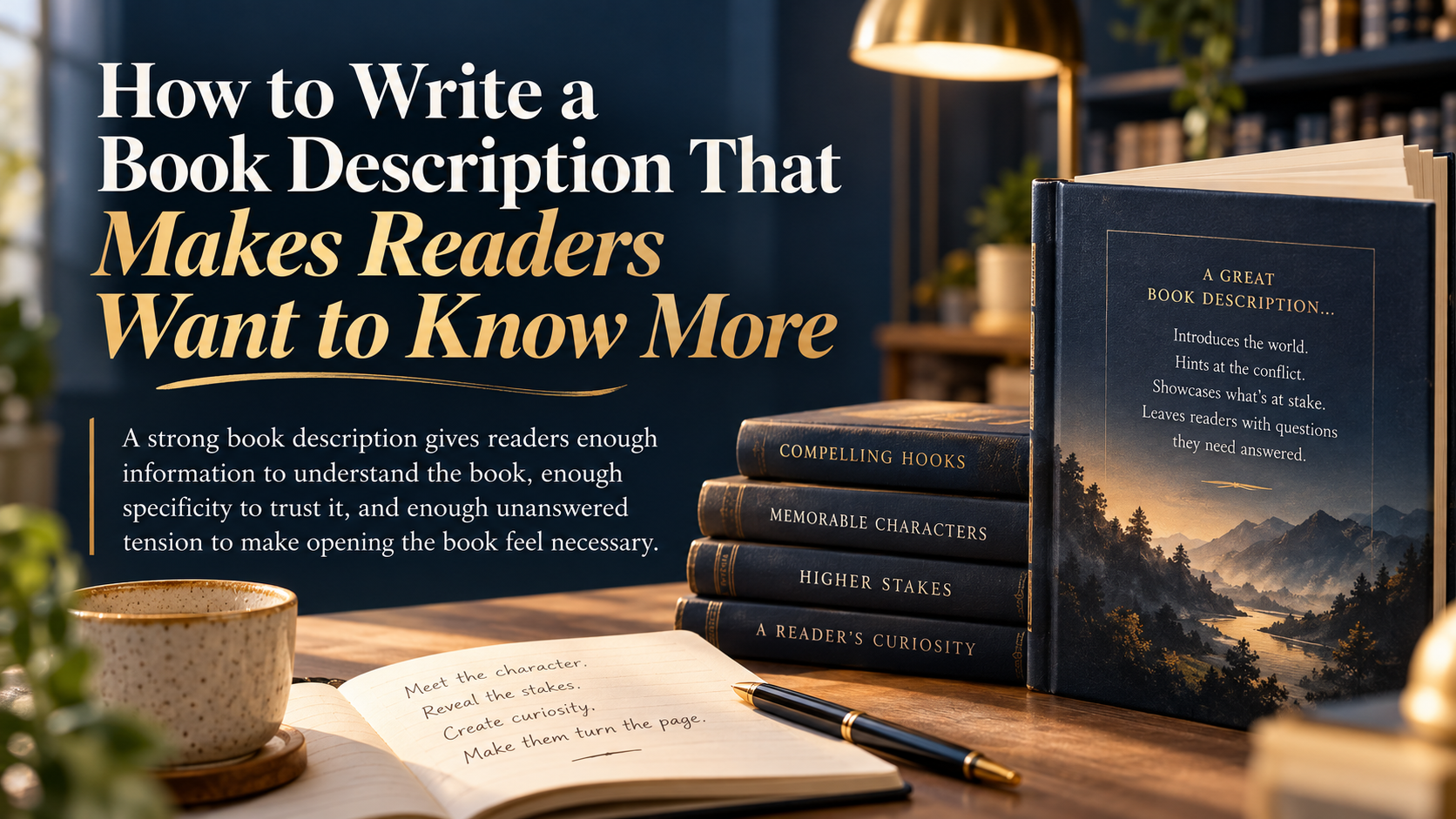
A strong book description gives readers enough information to understand the book, enough specificity to trust it, and enough unanswered tension to make opening the book feel necessary.
A book description has an unusual job.
It must explain a book without exhausting it. It needs to establish genre, subject, conflict, or value quickly, yet it should leave enough unresolved that the reader still has a reason to continue. It also has to work in places where attention is limited: retailer pages, catalogs, distributor databases, author websites, advertisements, press materials, and sometimes the back cover itself.
That makes a book description different from a synopsis.
A synopsis explains what happens. A useful sales description creates a reason to care about what happens next.
The distinction matters commercially because descriptions are also part of a book’s metadata. The Book Industry Study Group describes marketing metadata as information that helps define an intended audience, supports discovery, and informs purchasing decisions. IngramSpark similarly identifies the book description as one of the metadata elements that helps readers, retailers, and libraries understand a title.
The challenge for authors is therefore not to squeeze the entire manuscript into a few paragraphs.
It is to identify the part of the book that makes the right reader curious.
Begin With the Reader’s Decision, Not the Author’s Summary
Authors know too much about their own books.
They know the backstory, secondary characters, research, subplots, themes, world-building, motivations, and details that took months or years to develop. When asked to describe the book, the natural instinct is often to summarize all of that information.
Readers arrive with none of it.
They are making a faster decision:
What is this book, and why might I want to read it?
Amazon KDP’s current guidance recommends keeping a description simple, compelling, and professional. It advises authors to focus on the main plot, theme, or idea rather than overwhelming a prospective reader with detail, and to make the opening sentence strong enough to capture attention quickly.
That principle changes how a description should be written.
Instead of asking, “How do I summarize my book?” ask:
“What does a reader need to know before wanting the next piece of information?”
For a thriller, that may be the threat and the stakes.
For a romance, it may be the relationship and the obstacle separating the characters.
For a memoir, it may be the central experience and the question the author was forced to confront.
For a business or self-development book, it may be the reader’s problem and the distinct approach the book offers.
The description becomes stronger when it is constructed around reader interest rather than manuscript chronology.
The Opening Has to Earn the Next Sentence
Online retail pages frequently show only part of a description before requiring readers to continue.
That makes the beginning disproportionately important.
IngramSpark recommends leading a long description with a concise headline or opening statement capable of standing on its own before the reader chooses to see more. Its guidance then moves into a fuller exposition and a strong close.
The opening does not need to be theatrical. It needs to create orientation and interest.
Weak openings often rely on empty praise:
An unforgettable story that will take readers on an emotional adventure.
The sentence sounds positive, but it says almost nothing about the book.
Compare the information density of a more specific approach:
A forensic accountant discovers that the fraud she has been hired to expose leads directly to the family that built her career.
The second example establishes a protagonist, situation, conflict, and consequence. A reader can immediately begin forming questions.
Nonfiction follows a similar principle.
A generic opening might promise to “transform your life” or “provide powerful strategies for success.” Those phrases are broad enough to apply to thousands of books.
A stronger description identifies the actual problem:
Many first-time managers are promoted because they perform well individually, then discover that the skills that earned the promotion are not the skills required to lead a team.
Now the reader knows who the book addresses and what problem it intends to solve.
Specificity creates interest because it gives curiosity something concrete to attach to.
Fiction Descriptions Should Create Tension Without Retelling the Plot
Fiction descriptions are often weakened by excessive synopsis.
The author introduces the protagonist, then explains the setting, childhood history, inciting incident, secondary characters, antagonist, midpoint, romantic complication, and several later developments.
By the end, the reader knows a great deal about the plot but has little left to discover.
Amazon’s metadata guidelines explicitly prohibit spoiler information in book descriptions. Its broader description guidance also advises focusing on the central plot or idea rather than loading the description with unnecessary details.
A fiction description usually needs four things:
- a character or focal situation;
- a meaningful disruption;
- escalating stakes;
- an unresolved question or pressure point.
Those elements do not have to appear as a rigid formula. Their purpose is to create narrative movement.
Consider a fictional mystery:
When archivist Elena Vale receives a box of letters written by a woman who officially died forty years earlier, she assumes someone has mislabeled the collection.
That is information.
Then:
The final letter is dated three days ago.
Now there is tension.
The description can continue by establishing what Elena risks by investigating and what forces oppose her. It does not need to explain the solution.
The goal is to bring the reader to the edge of the story rather than escort them through it.
Let Genre Expectations Work for You
Descriptions should also tell readers, directly or indirectly, what kind of reading experience they are considering.
KDP recommends setting expectations by making the book’s genre apparent in the description.
A cozy mystery and a psychological thriller may both involve murder, but they should not necessarily sound alike.
A romantic comedy can signal warmth, humor, attraction, and conflict.
Epic fantasy can establish scale, world, power, and consequence.
Literary fiction may emphasize voice, character tension, social context, or emotional complexity.
Genre is not a cage. It is a reader contract.
The description should help the intended audience recognize that contract.
Nonfiction Descriptions Should Lead With Relevance and Value
Nonfiction faces a different problem.
Readers often need to understand what the book will help them know, do, reconsider, or accomplish.
The description therefore needs clarity about audience and value.
IngramSpark recommends that nonfiction descriptions identify the subjects covered and the important people, places, themes, or topics involved. Its current 2026 metadata guidance also stresses that clear, detailed descriptions, appropriate subjects, and relevant keywords help the right readers discover a title.
A practical nonfiction description can often move through this sequence:
Identify the problem.
What situation brings a reader to this book?
Establish the perspective.
What does the book argue, explain, or approach differently?
Show the contents selectively.
What will the reader learn or be able to apply?
Clarify the audience.
Who is most likely to benefit?
Suppose a book is about retirement planning for freelance professionals.
A weak description may say:
This comprehensive guide covers everything you need to know about money, savings, investments, retirement, and financial freedom.
The promises are broad and difficult to evaluate.
A more useful description might explain that conventional retirement advice often assumes predictable salaries, employer plans, and stable monthly income, while independent professionals work under different financial conditions.
That framing immediately tells the intended reader why this particular book might be relevant.
Benefits Need Evidence Behind Them
Nonfiction descriptions frequently become exaggerated.
Books promise to revolutionize careers, eliminate anxiety, guarantee financial freedom, transform relationships, or produce extraordinary results.
A description becomes more persuasive when its promises remain proportionate to what the book actually contains.
Instead of:
This revolutionary method will completely transform the way you lead.
Consider:
The book presents a practical framework for handling delegation, feedback, difficult conversations, and the transition from individual contributor to manager.
The second version may sound less dramatic. It is also easier to trust.
Trust is part of conversion.
Write the Description as Sales Copy, Not as a Review
Authors sometimes try to make descriptions sound authoritative by inserting their own praise.
Powerful.
Groundbreaking.
Unforgettable.
The definitive guide.
There are circumstances in which verified awards, endorsements, or editorial reviews can be used elsewhere in book marketing. The description field itself, however, is subject to platform-specific restrictions.
Amazon KDP’s current metadata guidelines do not permit reviews, quotations, testimonials, requests for customer reviews, promotional material, price information, alternative ordering information, website URLs, or time-sensitive promotional details in the book-description field.
That means authors should not assume the same promotional copy can be pasted unchanged into every retailer or distributor field.
Platform requirements differ.
The safer editorial principle is to make the description persuasive through the book’s own content.
A good description should still work after every adjective of praise has been removed.
Use Search Language Naturally, but Do Not Turn the Description Into a Keyword List
Book descriptions also participate in online discovery.
BISG identifies metadata as part of the infrastructure that connects books with readers throughout the supply chain, while IngramSpark advises publishers to use accurate subject information, descriptive language, and targeted keywords to improve discoverability.
This does not justify keyword stuffing.
Amazon separates its description and keyword fields. KDP currently allows authors to provide up to seven keywords or short phrases and recommends choosing terms that accurately reflect what readers may search for. Its metadata rules prohibit adding keyword or book-tag phrases to the description as promotional metadata.
The distinction is useful.
Natural descriptive language is good:
A practical guide to estate planning for blended families.
A keyword dump is not:
estate planning blended families wills trusts probate inheritance family money estate book
Write first for comprehension.
If the book is genuinely about estate planning for blended families, the relevant language will usually appear naturally because accurate description and discoverability are aligned.
Structure the Description for Scanning
A description may contain excellent copy and still fail visually if it appears as one dense block.
IngramSpark recommends using short paragraphs and, where appropriate, formatting such as emphasis or lists to make descriptions easier to read. Amazon KDP likewise supports basic formatting through its editor and a limited set of HTML tags.
On Amazon KDP, the current description field has a maximum of 4,000 characters. KDP recommends aiming for approximately a 150-word description with clear, easily scanned sentences. IngramSpark generally recommends descriptions around 150–200 words, although different distribution contexts may call for short and long versions.
Those figures are platform guidance, not a universal law of copywriting.
A 120-word description that creates clear interest is preferable to a 300-word description padded to meet an imagined ideal.
The useful question is whether each paragraph has a distinct job.
For example:
Opening: establish the premise or reader problem.
Middle: deepen the conflict, subject, or value.
Close: clarify what kind of reader will find the book compelling or what remains at stake.
That creates progression rather than repetition.
Do Not Confuse Mystery With Vagueness
Authors are often told to “create intrigue.”
Some respond by withholding nearly everything.
Everything is about to change.
One decision will alter the future forever.
Secrets will be revealed.
The sentences create suspense in theory, but they do not supply enough context for the reader to know why the suspense matters.
Curiosity requires information.
The reader needs enough specificity to form a question.
Instead of:
She discovers a secret that changes everything.
A description could say:
While settling her mother’s estate, Mara discovers that every photograph from the first seven years of her childhood has been altered to remove the same man.
Now the reader has something to wonder about.
Who is he?
Why was he removed?
Who altered the photographs?
What happened during those seven years?
The description has withheld the answer while supplying enough information to create meaningful curiosity.
That is the balance.
Avoid Common Description Problems
Most ineffective book descriptions do not fail because the author cannot write. They fail because the author is solving the wrong problem.
A few patterns appear repeatedly:
Starting too far back.
The description spends most of its space explaining history before reaching the actual premise.
Naming too many people.
A reader encountering eight unfamiliar names in two paragraphs has to work unnecessarily hard.
Explaining every theme.
Themes are often stronger when they emerge through premise and conflict rather than being announced individually.
Using vague superlatives.
Words such as incredible, life-changing, powerful, and unique offer little information without supporting specifics.
Writing from the author’s perspective.
“This book is very important to me because…” may belong in an author’s note, but it is not automatically the strongest sales description.
Giving away the resolution.
A description should create forward pressure, particularly in narrative genres.
Copying competitor language too closely.
Comparable books are useful research, but the description still has to articulate what distinguishes this title.
Writing once and never revisiting it.
A description is publishing metadata. It deserves the same professional review as other reader-facing material.
From the Editorial Desk
A strong description usually contains less information than the author initially wants to include.
That can feel uncomfortable.
Authors have spent hundreds of pages developing nuance. Reducing the book to a handful of paragraphs may seem reductive.
But a description is not a miniature version of the manuscript.
It performs a different editorial function.
The manuscript rewards attention.
The description must first earn it.
That means deciding which details create movement and which merely consume space. A secondary character may be fascinating in Chapter 12 and completely unnecessary in sales copy. A historical fact may be central to the author’s research but irrelevant to the prospective reader’s first decision. A major theme may be more effectively implied than named.
Good description writing is therefore an exercise in editorial hierarchy.
The question is not, “What is important in my book?”
Many things may be important.
The question is, “What information is most useful at the moment when a reader is deciding whether to know more?”
That is a much narrower test, and usually a more productive one.
Our Modern Books
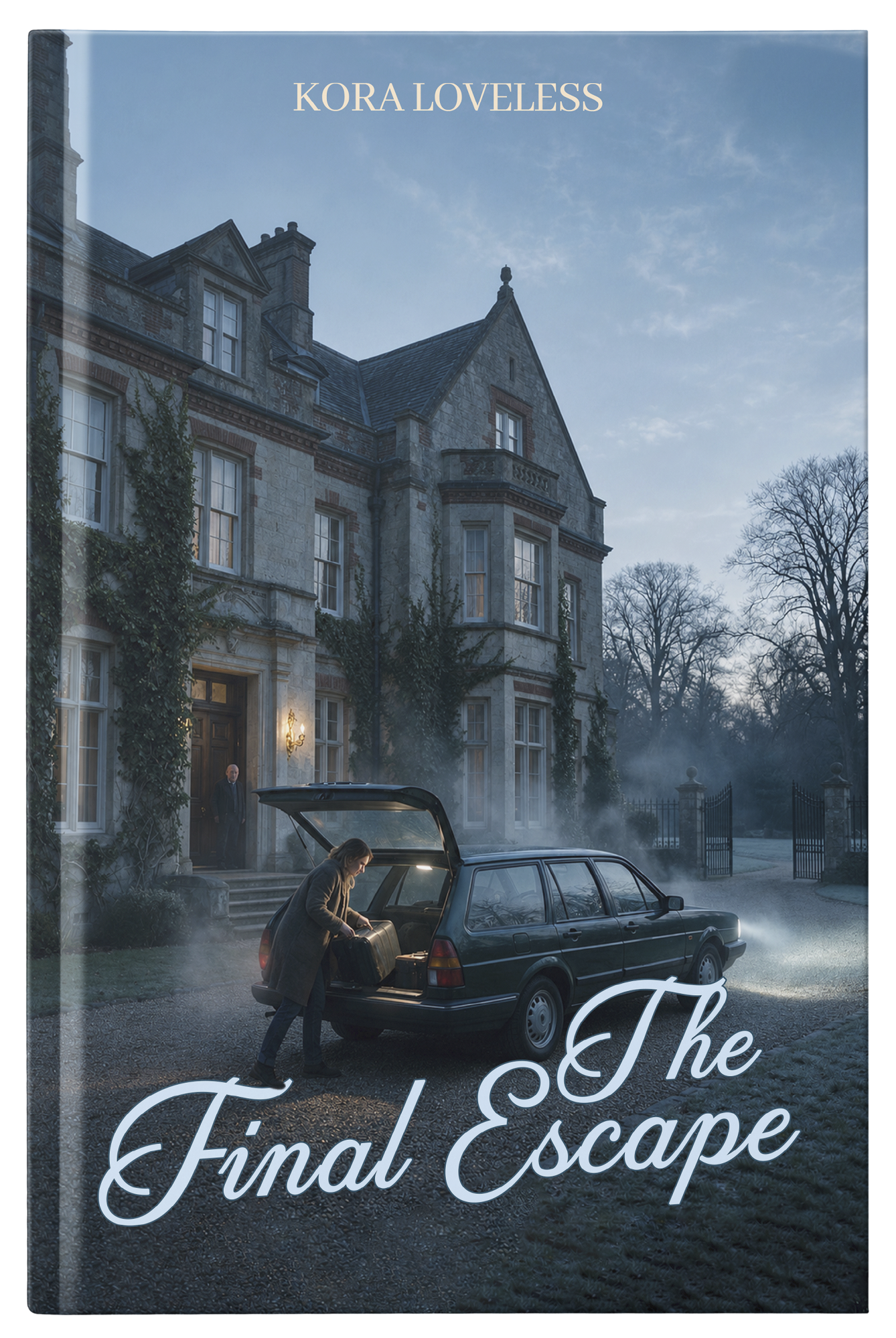
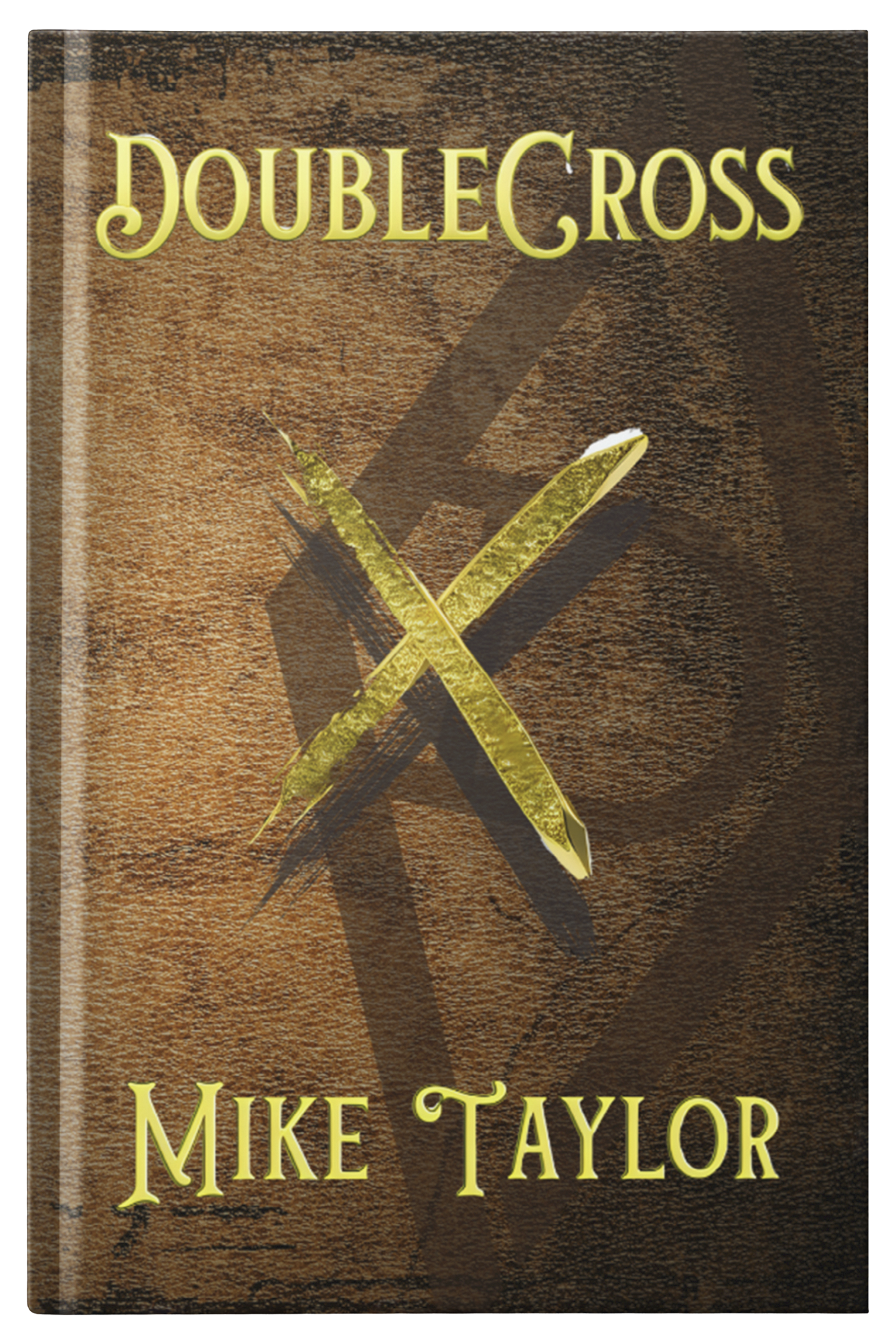


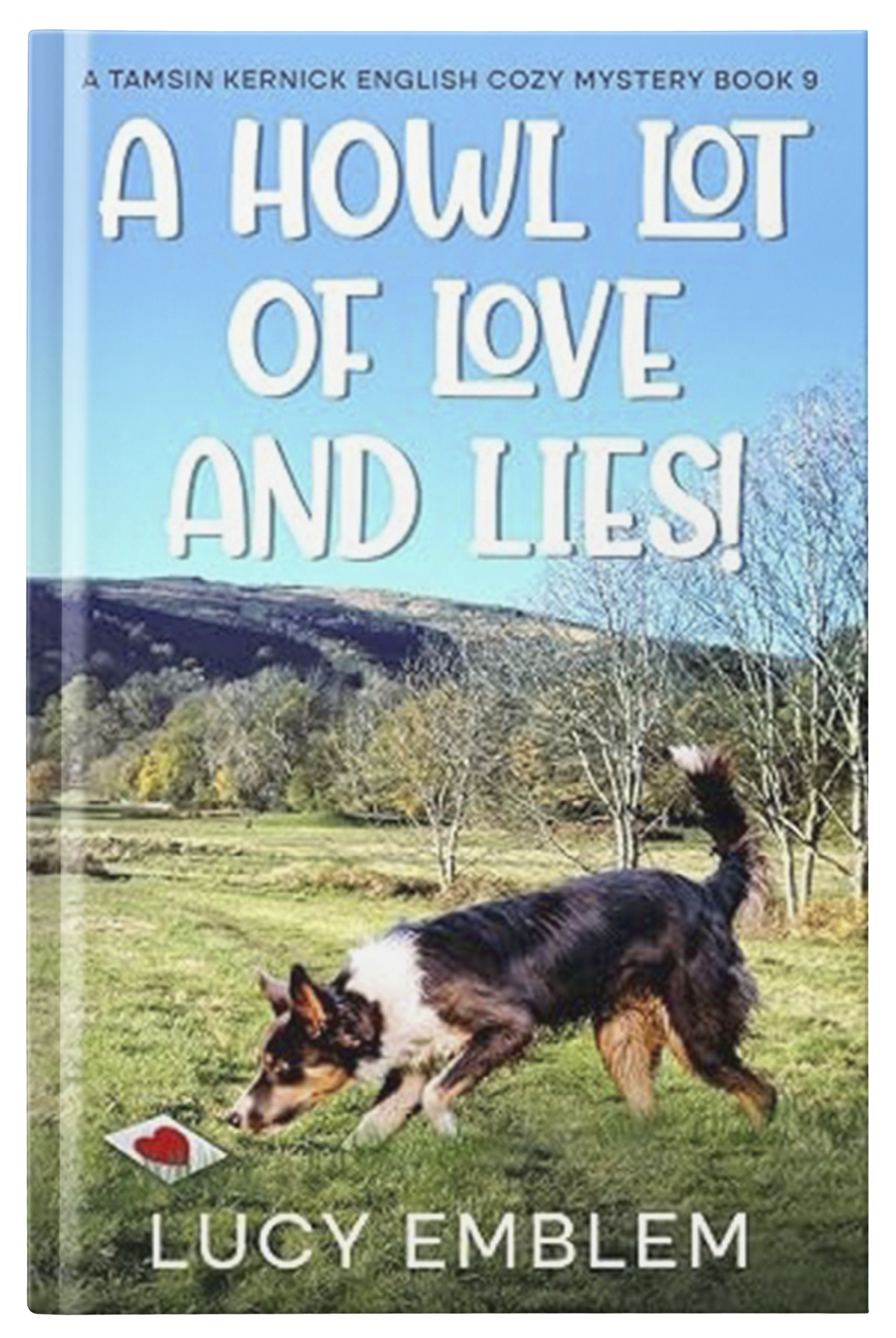


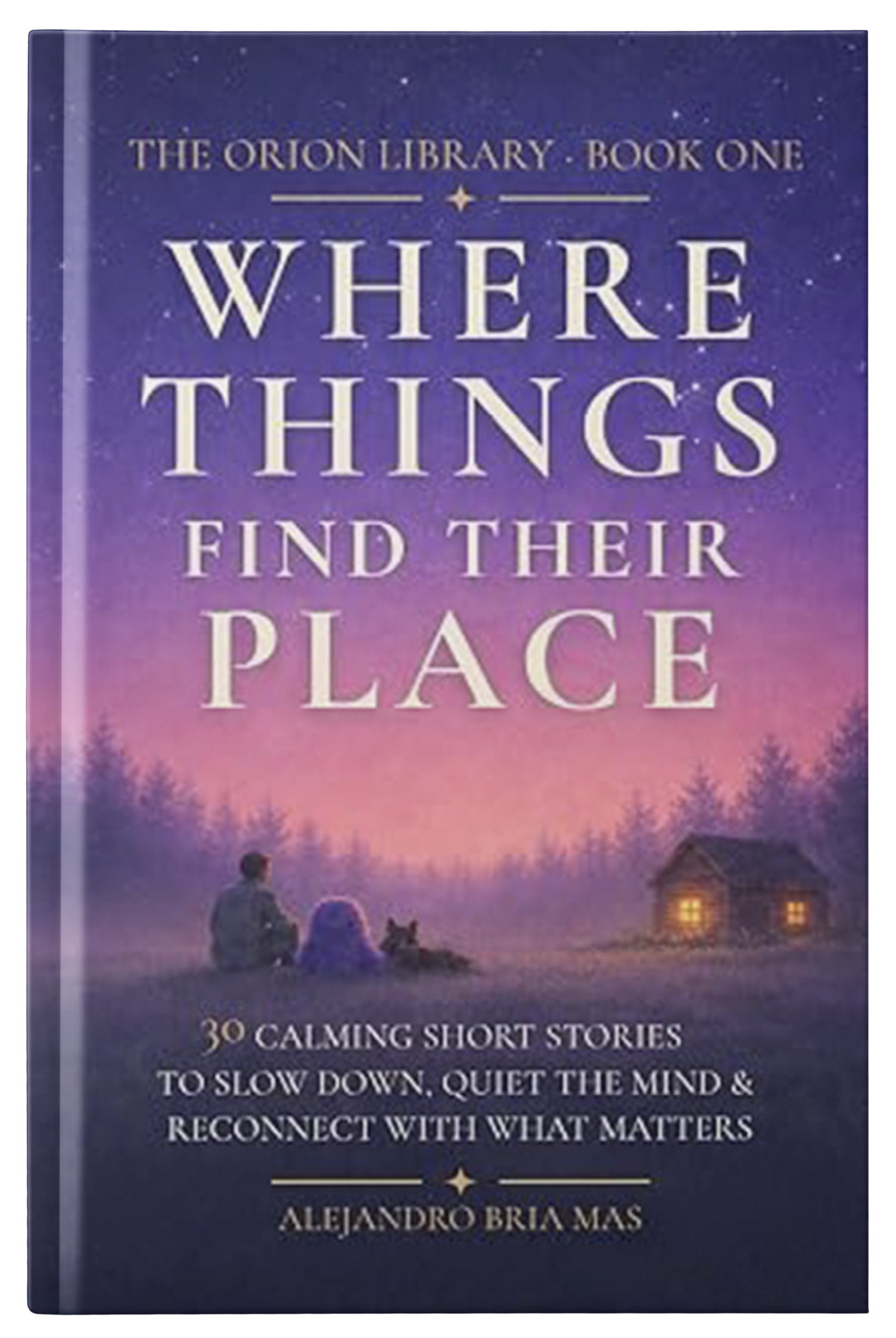

Contact form
KEY
TAKEAWAYS
A description is not a synopsis.
Specificity is more persuasive than praise.
Fiction and nonfiction require different emphasis.
Write for readers before search engines.
Check each platform's rules.
FINAL THOUGHTS
The best book descriptions do something slightly counterintuitive.
They stop before the reader is satisfied.
Not because they are incomplete, but because they have completed the correct task. The reader understands the kind of book being offered, recognizes why it may be relevant, and has been given a question, conflict, idea, or promise worth following further.
There is still something left to discover.
That remaining distance between understanding and knowing is where curiosity lives.
Authors should therefore resist the urge to explain every important feature of the manuscript. Identify the book’s strongest point of entry. Make it concrete. Establish the stakes or value. Remove information that slows the decision. Then end while the reader is still leaning forward.
The description does not need to close the story.
It needs to open the book.